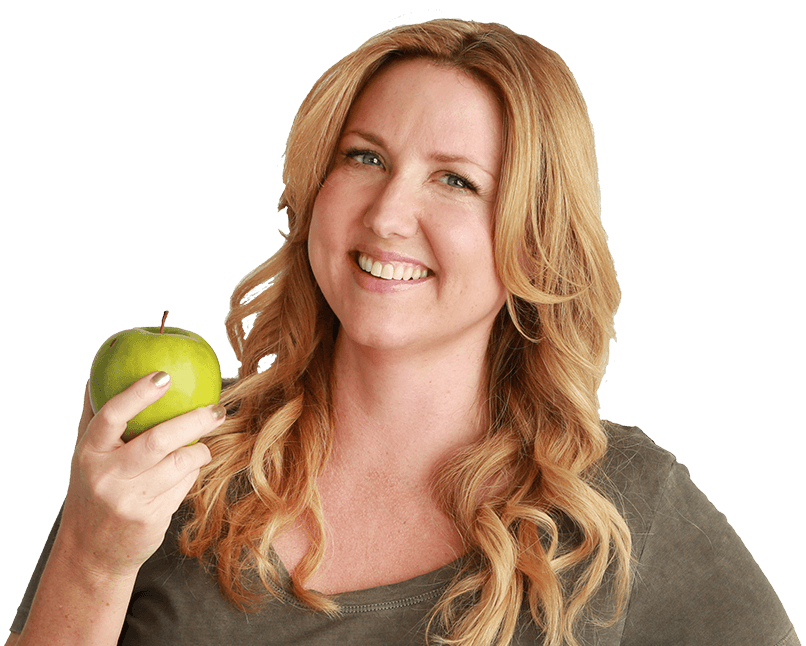
Biology of Trauma: How Emotional Pain Creates Cancer, Autoimmunity, Fatigue & Chronic Disease
with Dr. Aimie Apigian
Dr. Wendy Myers
Welcome to the Myers Detox Podcast. I’m Dr. Wendy Myers. On this show, we talk about everything related to heavy metal and chemical toxicity and the health issues caused by these toxins. We talk about emotional trauma, anti-aging, bioenergetics, and more advanced topics than you’ll hear on other podcasts. So today we’re gonna be talking about emotional trauma and how that causes physical health issues. A lot of people don’t make that connection. They think that if they have a physical symptom that requires a physical solution, a medicine, a pill, or what have you. We have Dr. Aimie Aipigian. She’s gonna be on the show today talking about her new book, The Biology of Trauma. She’s had runaway success with this book for many reasons.
So we’re gonna be talking about what trauma is exactly, including neglect. We’ll talk about attachment styles. We’re gonna talk about what health issues are caused by emotional trauma and the things that you can do to release emotional trauma to prevent all different types of health issues, including cancer. It is a really good show to date.
Our guest, Aimie Aipigian, is a preventive and addiction medicine physician with master’s degrees in both biochemistry and public health. She’s the national bestselling author of The Biology of Trauma and hosts her own podcast, leads online nervous system healing courses, and holds a practitioner certificate, a training program bridging the worlds of functional medicine, attachment, and trauma. She’s a leading expert on how the body holds fear and overwhelm from the past to make one sick today. You can learn more about Dr. Aimie and her work at biologyoftrauma.com. Dr. Aimie, thank you so much for joining us.
Dr. Aimie Apigian
Thank you. It’s always a pleasure to see you, and I look forward to the conversation.
Dr. Wendy Myers
Why don’t you give us a little bit about your background and why you are focusing so much on trauma?
Dr. Aimie Apigian
I have seen that trauma really is the missing conversation in medicine. Even just this morning, I was talking with a professor at Harvard, and she actually is based in psychology, but as she was working with women veterans, she’s going in and seeing that all of them with PTSD also have heart disease and diabetes. They’re getting cancer, they’re getting sick, and yet she’s looking for funding to do this research. The heart disease department is saying, no, no, no. We only fund research on heart disease. The PTSD group is saying, no, no, no. We only fund research in PTSD. And she’s like, but they’re both. This is the conversation that I think people are ready to have, but medicine and mental health are still so siloed that we need to be able to bring in trauma and the body and help people understand what is the difference is between stress and trauma because how they navigate life depends on them knowing that difference and how it feels in their body.
Dr. Wendy Myers
I think people don’t realize that it’s like between 65 to 95% of physical health issues are from emotional trauma.
Dr. Aimie Apigian
And that’s why this isn’t that crazy to think about
Dr. Wendy Myers
This is conventional.
Dr. Aimie Apigian
I always get curious, like, well, is it 65 or is it 95? I would love to hear your opinion on that, Wendy?
Dr. Wendy Myers
Well, this is conventional medical research done by Kaiser Permanente. They did a study of 17,000 people looking at the adverse childhood experiences or ACEs, and they tested about 10 different ACEs, but there are many more. But just based on those 10 ACEs, they found that 65% of health issues are caused by emotional trauma. This is Kaiser Permanente just trying to save money or whatever they were doing. But if you add in all these other elements and all these other ACEs, there are estimates that it’s 95 plus physical health issues caused by trauma.
Dr. Aimie Apigian
So often what I saw as a physician is that a person’s autoimmunity or their chronic pain or whatever physical health condition that we’re gonna talk about was preceded by a significant emotional event in the two years prior, whether that was a divorce, a car accident, the loss of a child, becoming an empty nester, whatever meant something significant to them. It didn’t matter what the event was; it was what it meant to them, but that was the consistent story I could always ask. Tell me about what’s gone on in your life in the last two years. And there was always a story, Wendy.
Dr. Wendy Myers
A stressor is always the straw that breaks the camel’s back. I found that as well. People would have the death of a loved one or they would have just something going on. Or they can even have health PTSD where they have trauma from their health symptoms, poor guys. But tell me, as a physician, what’s the one thing that you wish everybody understood about the body and its experience of trauma?
Dr. Aimie Apigian
As I was writing my book, it was really hard for me to nail it down to if I can only say one thing ’cause that’s what I feel like I had to choose with my book. Otherwise, my book was twice the size. If I could only stress one thing as a physician, what would be the most important thing for me to communicate? And it was this Wendy, that when our body has experiences, we need to know how to move through them. We need to know how to bring them to a sense of completion. Otherwise, our body holds onto the emotions of those experiences. They become coupled with a sense of danger so that even when our life is good, we’re still feeling anxious and insecure and like the next shoe might drop. So I can never fully relax.
This is then what creates what I call the biology of trauma. So this idea is that we don’t need to accumulate the past experiences and the way to not accumulate is to be able to process things as they happen in the moment so that we’re not carrying them for decades
Ads 06:42
And now a word from one of our sponsors. One day I was researching an article for toxins in protein powders, and I was so shocked what one research study found about the levels of heavy metals in protein powders. Most people don’t realize that over two thirds of protein powders tested by consumer reports had lead above California’s Prop 65 limits, some of them 10 times over the limit. And in another study, 47% of top-selling US protein powders exceeded the limits as well. 21% had more than double. It is just alarming what’s in some of these products.
That’s why I switched to Puori, grass-fed whey. It’s an amazing tasting protein powder, and every batch is third party tested for 200 plus contaminants. Puori is the only supplement brand that publishes results online. So you can even scan a freak QR code on every bag and see what’s in your batch. Each serving delivers 21 grams of whey protein from grass-fed cows. They also have six grams of branch chain amino acids, and it’s made with totally clean ingredients. It’s totally free of hormones, GMOs, and pesticides. They have amazing flavors. They have bourbon, vanilla made with real vanilla seeds from bourbon vanilla from Madagascar, which is the best in the world.
They also have dark chocolate with dark chocolate from organic cacao powder. Honestly, it just feels really good knowing exactly what you’re getting, clean protein tested for safety and total transparency. You wanna use the code Wendy at puori.com. If you use the coupon code, you get 32% off the Puori grass-fed whey protein. And when you start a subscription, in addition, you get a free shaker worth $25 on your first subscription order, which brings a total savings to $49. So go to puori.com/wendy and use the code, Wendy, at checkout for this exclusive offer.
Dr. Wendy Myers
How do you go about doing that?
Dr. Aimie Apigian
Ah, such a great question. It depends on whether this is something acute or whether this is something chronic. By the time I discovered that I was holding onto trauma, we’re talking decades. I discovered this in my early thirties when I was diagnosed with anxiety, depression, being overweight, chronic fatigue, and then we discovered autoimmunity. Given that checklist, and knowing what I know about adverse childhood experiences, I knew that that was a message from my body that, whether I thought that I had trauma or not, it was holding onto experiences that it had perceived and experienced as trauma. Because that’s what makes us sick. If it makes us sick 20 years later, that was not just stress; that was a trauma for our body.
And so it’s different if you’re trying to resolve or complete an experience decades later, like I found myself versus if you are in some type of event, natural disaster experience right now, and it’s fresh, it hasn’t been held in your body. So when we’re looking at something that’s now, an acute experience happening now, what we want to be able to do is to let our body know that it has returned to a sense of safety. I think of the trauma response, and I laid this out in chapter one of my book, where I say the stress, the fight or flight, is not the trauma response. The trauma response starts with hitting this metaphorical wall, freezing at the shock that you’ve hit the wall and then the shutdown. That’s the physiological trauma response.
And it stuns us, and it shocks us. It is a form of heart shock, and in that moment, our body retreats like a turtle into its shell ’cause it’s not safe to be open. It’s not safe to be connected. It’s only supposed to protect right now. And so we physiologically shut down, even going into the cell danger response at the cellular and mitochondrial level. That’s where things will linger and tell. We come and we let the turtle know it’s all safe. It’s all safe. And so when our body doesn’t get that message, it then creates what we call chronic freeze, where we know that we have to function in life. And so we feel that part of us can do that. Part of us can put on a smile, put on our makeup, look good and show up, and then there’s this other part of us that just wants to hide from it all and it feels hard to show up.
That’s how we continue to live life. Pushing ourselves in order to show up, but that pushing through is not healing and it’s not healthy in the long term. And that’s when eventually, like my body, it will just give up. That’s when I found the book by Gober Maite, When the Body Says No. That book changed my life and led me onto the path that I am now.
Dr. Wendy Myers
I love Gabor. It’s so good. I think people are very good at ignoring their bodies, especially when they can’t sleep. It’s like, that’s your body screaming to you. I’m not safe. There’s something going on. I’m not safe with this person. And you think, oh, I just have sleep issues. Or, oh, I just have an anxiety disorder. I was just born like this to my genetics or whatnot. And it’s very easy to just write off these physical symptoms and look like a hanger to hang that on, and that’s why I love having these types of conversations to really open people up. Just because you have a physical symptom doesn’t mean there’s a physical solution necessarily. We can certainly mask symptoms and force our body into submission with medications and things like that, but you people need to do that deeper work. If you wanna be healthy, if you want to live a long, healthy disease-free life, you have got to work on your emotional trauma.
Dr. Aimie Apigian
You have to because as I see it, it’s so connected. You can’t actually separate them. If we’re holding onto our trauma, it’s going to attract toxins. It literally creates the conditions in which it welcomes and invites different toxins that then make us sick. And so then you can say, oh my goodness, look at all these toxins. I need to do a detox. Well, yes, and it’s not just gonna be the detox, it’s also the emotional detox. Actually doing the inner work to let go, release those emotions that have created the terrain that invited those other biochemical toxins.
Dr. Wendy Myers
For anyone listening, can you define emotional trauma? Because I think a lot of people, if they haven’t had severe trauma or abuse or anything like that, they’re not necessarily going to identify as having emotional trauma. Can you also talk about neglect as well, and how that’s really an epidemic, and how that can cause emotional trauma?
Dr. Aimie Apigian
So true, neglect is the most common form of trauma, and yet it’s the most hidden form of trauma. As I look at how the field has shifted over the years, it wasn’t that long ago, Wendy, when the word trauma was automatically attached to a war veteran, and you were automatically thinking of the Vietnam veteran, right? Because that’s really when we first started to recognize that many of them are coming back with symptoms that don’t allow them to integrate back into society. They’re just not themselves anymore. And it’s been quite a job then to open up the conversation to say, but there’s this thing called childhood trauma, but there’s this thing called attachment trauma.
This is trauma as well. We had only set it as something so big and so bad that it had to be like a war veteran. And so part of what confused me was seeing that my body was holding onto trauma, and yet I did not at all think that I had had trauma. You have to understand that the context for me was that I had become a foster parent and then adopted. I had my son that I could compare my childhood to his childhood and definitely say he had it so much worse. Who am I to say that I also had trauma? I think a lot of people go down that comparison route. So that’s why it was important for me to lay out here the five steps of the body’s experience of trauma, so that whatever situation it is, it doesn’t matter.
It doesn’t matter what’s happening outside of us. It’s what’s happening inside of us. That’s what defines whether something is a trauma or not. And as we go into the trauma response, we will always go through very specific steps. And those specific steps take us through the stress response. Now, the stress response is going to be the first line of defense against any sense of danger, and this is mediated by our sympathetic nervous system. So for those who are familiar with the nervous system, you’ll know that this is the sympathetic branch or the nerve chain block that runs down your spine. That’s where your sympathetic nervous system is, which is why if you lay down on a mat like I use my BioMAT that has warmth and also the red light, you can quickly calm down your anxiety because it’s working directly on your sympathetic nervous system as it runs down the spine.
That system is designed to mobilize us, meaning its sole purpose is to get you to move, to take action, and that’s what we are designed to do in our first response to danger. If that doesn’t work or if that becomes dangerous to do, then our body says, well, that’s not a good idea, and it escalates to the next level of survival response. We can talk about that in a minute, but I want people to understand that they have different levels of survival. The first level of survival, the first response to survival, is always going to be taking action, which is mediated by adrenaline and our sympathetic nervous system. And then something happens, and that’s what I call crossing the critical line of overwhelm.
Ads 18:33
I wanna take a minute to give a shout out to one of our sponsors, True Energy Skincare. They have an amazing serum that I am cuckoo about. I’ve been using their facial serum here for well over a year for a reason. This is just by far one of my favorite products. It’s very, very light. It’s just a serum you’ll put on under your moisturizer. And the reason I use it is because it’s a frequency-based skincare. They have frequencies imprinted on this serum that improve collagen, improve elastin. Collagen is that support matrix in your skin that makes it look firm and juicy and we lose that as we age. That accelerates rapidly after we hit menopause. You lose 30% of your collagen within two years after menopause. I’m using everything I can get to improve collagen. This has over 2000 frequencies imprinted on it for skin nutrition, to help the appearance of your skin, the fine lines, the age spots, and it will smooth out the texture of your skin as well.
This has been my secret weapon that I’ve been using to improve my skin, look and feel healthy, like I said, for well over a year. And so, I’m not promoting this because they’re a podcast sponsor. I’m promoting this because this is one of my secret weapons. I love this product and I use it every single night under my moisturizer. This has no toxic ingredients in it whatsoever. It has lots of nutritive ingredients as well. It’s got fruit, enzyme extracts. It’s got oat kernel extract. It’s got oat beta glucans. It’s got beach bud extract and it’s got algae and chlorella in it as well. It has lots of great nutrition in this as well as the frequency enhancing aspects of it. Any old product can moisturize your skin. That doesn’t impress me, but the results you get from this are bar none, and that is why I highly recommend it. They have a very good offer for my listeners. Go to trytrueenergy.com/wendy and get a very special deal for my listeners.
Dr. Wendy Myers
Can we go back to neglect? That’s something for me that I experience. All of our parents do the best with what they have and what they’ve learned and whatnot. But, can you define what neglect is so people can identify that? ’cause I really want people to understand that if you have neglect you can have a lot of emotional trauma and emotional issues stemming from that, that you might not be aware of because you don’t identify as having been emotionally traumatized.
Dr. Aimie Apigian
There are two reasons why we will cross that line of overwhelm and move into a trauma response. One reason is something happens too much, too fast. Too much, too fast. That’s it. This is a common example of a car accident. The car came at me too fast. There was nothing I could do. I didn’t have time to think. I didn’t have time to move. I didn’t have time to outmaneuver. It just happened too much, too fast. There’s also an amount of too much, too fast if there’s a series of experiences, maybe losses or death in your life. There’s been too many this year, and if it were only one, I could process it. I could grieve it, but it’s been one thing after the other and it’s just been too much, too fast.
But then there’s this other reason. The other reason for crossing that line of overwhelm into a trauma response is too little for too long. And that’s where neglect comes in. That’s why it’s so hard to recognize. ’cause how do you recognize when something is too little of what you need? It’s much easier to recognize the big thing. But what if it’s just absent? What if you don’t get enough touch? What if you don’t get enough support? What if you don’t get enough of what you really need and it’s just been too long? When our body senses that it doesn’t have something that it needs, it’s going to go into a stress response because that’s now dangerous. Anything that might compromise what we call homeostatic capacity, anything that compromises our body’s ability to monitor and keep our physiology within this tight window of which we can stay alive, it perceives that as a danger, a potential life threat. And when we have too little of something, it sees that as a danger.
One clear example of this was the studies done on orphans in World War II. This was largely done by John Bowlby, who was considered the father of attachment theory, and what he discovered was that these orphans were not being touched enough and the orphans, these babies who were not touched, died. They didn’t die from the fact that they were sick and they were born with complications, these weren’t expected deaths. It’s the fact that we are human beings and meant for connection. We’re meant for love, we’re meant for touch. And when we don’t have those things or enough of those things, it is a danger to our physiology and our life.
That is then when we can cope for a period of time, and I’ve done that. I’m sure you’ve done that. Looking back at your life, you can see how when there was some form of neglect, not getting the love, not getting the understanding, not being heard, not being seen, these are all ways in which we as children needed those things. They weren’t just nice to have. We needed those things. Not getting them was stressful. And so we adapt to that stress and we can keep going for a period of time, but eventually, we don’t just adapt. There’s something inside of us that breaks, that we start to believe then that I am unlovable. There’s something wrong with me. And that’s when we start to see this emotional neglect become our biology and become our diseases as an adult.
Dr. Wendy Myers
I think a lot of people have that experience where they’re clothed, they’re taken to the soccer games, but the parents just don’t have the emotional attunement to them, or they don’t understand what the child needs or if they’re hyperactive or ADHD or whatnot. They just don’t know how to deal with that issue. Let’s talk about some of the physical symptoms of emotional trauma and what kind of health issues and diseases, namely cancer as well, can manifest as a result of having emotional trauma. And this is how important it’s to work on it ’cause in the school of German new medicine, there was a whole map of the human body and the cancers that people had and what organ is directly related to the different types of emotional trauma that they had. This is Dr. ER’s work. It’s incredibly interesting. Can you talk a little bit about that?
Dr. Aimie Apigian
I was just researching the other day this relationship between cancer and trauma and there’s actually quite a bit of research and you will not be surprised by this, but there is just as much of the recognized trauma from their health experience, like their experience with their physicians with the actual cancer treatment, and then they’re moving into such a degree of fear of remission after treatment, that there is quite a strong association between cancer and recognized trauma. When we look at specific emotions and conditions, this has been so fascinating for me to lean into, and not only to recognize in myself, but then recognize in my patients and now my course members, where something like autoimmunity. Autoimmunity is a condition where your immune cells are attacking your own tissues.
Well, I have never met a person with an autoimmune condition who truly, deeply loves themselves. They all don’t like themselves. They all have something that they feel that they need to hide from other people. I know that I did. I was at that time doing a lot of emotional eating and binge eating, and there was no way that I wanted other people to see that about me, so I was hiding that. I was hiding these parts of myself that I was very embarrassed about. I was very ashamed of, and I did not like myself. So autoimmunity is one of those conditions where we can see that often it happens in high-performing women, and these women have learned to push through and to be whatever other people want them to be. It’s not safe to be their authentic self.
Ads 28:42
Are you taking collagen supplements? Well check this out. Our friends at Organifi have sourced the best collagen on the planet, and you can get it with 20% off savings today too. So, what is collagen? It’s the most abundant protein in our body. It’s everywhere. It’s in your muscles, joints, hair, skin, fingernails, everywhere. It’s one of the fundamental building blocks of life. Your body uses collagen constantly to keep itself refreshed and repaired. But as you get older, especially as women that are going into menopause, you can lose 30% of your collagen within the first five years of menopause, and that starts in perimenopause as well. Your body just stops making as much of it and you start losing it, especially as your estrogen levels come down. That’s why consuming collagen is such a great idea every single day. It gives your body a fresh supply to keep working at its best.
It’s not only good for your hair, skin, and nails, but it helps to support your gut and metabolic health, immune system, cardiovascular strength, and all of your muscles and moving parts too. Collagen is nothing new. It’s one of the oldest supplements out there. Collagen supplements have been around for quite a while now. But what makes Organifi so special is it’s all about the quality.The non-organic collagen scare 16 me. They’re really problematic because they can be full of glyphosate, pesticides and other chemicals that you do not wanna be taking on a daily basis. Not all collagens are the same. It can come from many different sources and the source can drastically impact its potency and effectiveness as well.
Some manufacturers just go with the cheapest stuff that they can find and then add fillers and artificial flavors and they still charge you a lot of money for that. Organifi always goes the extra mile to ensure their quality is the best. They blend five collagen types from four different sources, and they taste and test until it’s perfect. And then they go even further to test for things like glyphosate residue and other sneaky toxins that can get into the mix. After passing through all of these goalposts, it finally gets the Organifi seal of approval so you can rest assured it’s the highest quality and non-toxic. I love that this company is a company that I can trust that their products will be safe and effective exactly as they say they will be.
In the supplement world these days, that kind of honesty and transparency is getting harder to come by. So, if you’ve never tried collagen, now is a great time to start. And if you’re already taking it, now is a great time to switch to a better brand. Upgrade what you’re doing right now so you and your entire body is gonna love Organifi Collagen. It is something that I take on a daily basis. It’s been a part of my supplement routine for the past five years, since I went into menopause, and so I can’t recommend it highly enough. Now let’s talk about saving you some cash as well. Here’s what you do. Go to organifi.com/myersdetox and put in coupon code Myers detox to get 20% off. Go to organifi.com/myersdetox and don’t forget the Myers detox coupon code as well. You’ll save an extra 20% off by putting in my special coupon code Myers detox. So, like I said, collagen’s one of those things that I take every single day. It’s one of the most important parts of my anti-aging protocol, the things I’m doing to fight off the clock. So for me, taking clean collagen is really important. It’s hard to find, so I highly, highly recommend Organifi collagen.
Dr. Wendy Myers
Can you guys identify with this that are listening right now? I know a lot of high- performing women listening to this
Dr. Aimie Apigian
We look at the research that has shown that there are quite a few women with autoimmunity who would relate to being a perfectionist.
Dr. Wendy Myers
Which is a trauma response.
Dr. Aimie Apigian
Yeah, and they have correlated the degree of perfectionism that a person holds themselves to that standard and their degree of fatigue, which is fascinating because again, if you go to your health practitioner and you say, I’m having exhaustion, fatigue. I’m always tired. They’re not going to be asking you about, do you hold yourself to a standard of perfectionism? They’re only going to be running labs, telling you to sleep better, to eat better, to exercise better. And so this is the strong emotional component that needs to still be brought into medicine. When we look at something like chronic pain, chronic neck pain and chronic back pain are strongly associated with childhood insecurities.
This is coming out of the work of John Sarno. He was a neurologist. He’s passed by now, but he founded this work as a neurologist and was shunned by all of his colleagues because this is not traditional neurology. In traditional neurology, you get an MRI, you get a CT, you do treatment, but none of this woo-woo stuff. Yet, what he’s looking at is he’s looking at an MRI scan of two people. They both have chronic pain and yet one has a significant deformity, another has another less degree deformity. And yet they still have pain.
Then comes in another person. They do this attachment work and resolve these insecurities that they carry. Their pain goes away, but their deformity doesn’t go away. They can still have a significant degree of scoliosis and you can look at their x-ray and be like, oh my goodness, you must be in so much pain. No, I’m not. And so he found that it had nothing to do with your structure because the body adapts. So when the structure initially changes, if there’s a car accident and that’s what changed your spine, for example, okay, there will be a time of acute pain, but once it turns chronic. That is no longer about the structure, that is about the meaning that you’ve created about yourself and your life. And interestingly, this is specifically related to neck and back pain.
Dr. Wendy Myers
I have a story to relate to that. For years I had lower back pain and I always thought it was just a bulging disc or something like that. I’d go and get an MRI and the disc wasn’t bulging anymore. But I still had the pain. I’m like, what is going on? I realized this over time and learning about that mind-body connection, that lower back pain can be a lack of support. So for me, it was a lack on the right side, a lack of male or fatherly support. On the left side was a lack of motherly support. For me, it was on my right side. It is really fascinating when you kind of get into that and identify why exactly you’re having an issue.
Dr. Aimie Apigian
So good, for me, I would have flare-ups of back pain and I would always assume that I had moved the wrong way, right? Like, oh, I picked up that box the wrong way, or I just turned that corner and threw my back out and now I know better. Now I know that when that happens, it was not how I moved. It wasn’t how I picked up the box. It was my blood circulation. The microcirculation around those muscles was already in inflammation because of the insecurity that had been triggered. But I hadn’t recognized that insecurity yet, perhaps.
This was my body’s way of showing it to me. And until I asked those kinds of questions, I would never get to the bottom of it. I would stay focused on the physical pain as opposed to the attachment insecurity, like the lack of support, for example, that had been triggered by someone or something hard in my life.
Ads 37:10
And now a word for one of our sponsors. If you cook with non-stick pans, there’s a good chance that you are consuming plastic. It’s not fearmongering. It’s what the current research suggests. There’s a 2024 study that showed that just one scratch from a Teflon coated pan can release thousands of microplastic particles into food during cooking, every saute, every egg, every healthy homemade meal.
These particles don’t just exit the body. They accumulate in your arteries, in your brain tissue, and may contribute to hormonal imbalance to inflammation and cardiovascular risk. So there was one study that found a 4.5 times higher risk of heart attack or stroke in people with microplastics lodged in arterial plaque and others have identified plastic particles inside brain tissue itself.
This is why reducing daily toxic exposure wherever possible is such an important part of long-term health. And it’s not just old or damaged cookware. Research suggests that even brand new non-stick pans can begin shedding particles from every use. This is one reason that I’m very, very mindful about the materials that I use in my kitchen. That’s why I recommend the P600 ceramic cookware. I personally use these. The P600 is completely free from Teflon, PFAS and plastic based coatings. It’s made with Swiss engineered, ceramic designed to be truly non-toxic. It heats evenly, it cleans easily, and most importantly, it doesn’t add to your toxic load.
So reducing exposure doesn’t require perfection. It’s just about making smart upgrades where they matter the most. So, if cookware is something that you use daily, this is a very meaningful place to start. Right now, the P600 cookware is 50% off, and for a limited time for my listeners, you can take an additional 20% off by using coupon code Wendy 20 at checkout. Just go to chefsfoundry.com, use the coupon code, Wendy 20. Your body and your detox pathways will thank you
Dr. Wendy Myers
A really good friend of mine’s a cancer doctor, and the first thing he does is emotional trauma work on them, usually bioenergetic emotional trauma work, and it has unbelievable results. There’s no chemoradiation involved in any of that. He is doing mainly emotional trauma work, and it’s unbelievable the results that come from that with the tumors disappearing very quickly. We don’t wanna make any claims like that. Let’s talk about what you talk about in your book. What are some of the ways that you recommend people go about addressing their emotional trauma?
Dr. Aimie Apigian
I cover that in section three, and as I look at section three of my book, it really speaks to exactly what we just were talking about. No, we can’t claim that it’s gonna cure your cancer. We can’t claim that it’s going to do anything. But what it does do is when we regulate our nervous system, it allows for the internal conditions to be changed. It’s like changing the soil in your garden. Is it going to allow a different kind of flower to grow or a different quality of the flower to grow? You’re changing the conditions of which things grow or they don’t grow. The process here needs to be designed in such a way that we’re able to move through this safely.
And what I saw many high-performing women do was once they realized that they had stored trauma, they’re like, all right. Let’s dive in. Let’s process all my childhood. I wanna get this stuff done, get it out, whatever the right word is, and just be able to be done with it so I can live my life. The idea is that if you don’t know how to swim yet, I don’t want you jumping into the swimming pool. Let’s get into the swimming pool where it’s shallow, and then we can build our skills and I can teach you how to swim so that then we can go into the deeper waters and you don’t drown. But many people have the experience of opening up too much too fast, and they get drowned by their own emotions and memories and drama that gets opened up.
It’s like opening up Pandora’s Box. You don’t really know what all your body’s holding.
Rather than disrespect that and say, doesn’t matter, let’s go all in. Why don’t we respect that? Why don’t we honor that and say, there’s a reason why my body has been holding onto this and it’s because it hasn’t felt safe to open up. So rather than forcing the opening up, what if I made it safe and then invited the opening up? And in that way, Wendy, we align with our bodies principles and it’s innate healing strategies rather than working against our body. Still, we’re aligning with it and becoming deep friends with it in the process, which will allow us to live life very differently, where we’re not just even connecting with our body, but we’re in a relationship with our body.
We can hear its messages, understand its messages, and respond to its messages. That allows for this work to become a portal to our best life ever, and I call it being in our best health and being our best selves because those two happen together. It’s not that we can change our inner state, create different conditions, and not affect our physical health. It’s going to change your life.
Dr. Wendy Myers
I think one thing that people should be aware of is that a lot of our trauma is unconscious. So we’re not consciously aware of it in order to even talk about it and talk therapy. That’s why talk therapy doesn’t work for a lot of people. It’s great for many, many reasons. I am not an expert in neurosis, but when people are not consciously aware of their traumas, things that happen to them in the uterus, things that happen to them one or two years old, that could still be held in their body and their nervous system. And so how does someone go about working on that?
Dr. Aimie Apigian
So, so good. There are phases of the healing journey, and so a person needs to know in what phase am I, because each phase has a different focus. Phase one of the healing journey is this is not the time to go into the story. This is the time to learn the skills to create inner safety. And most people, I find, have not actually truly felt safe in their body. They tell themselves that they’re safe. They may drink a glass of wine in order to help themselves feel relaxed. But they’re not truly feeling safe, and they’re using mechanisms in order to promote that sense of relaxation because it’s not something that’s internal to them. So the very first phase is always developing the skills, learning the skills.
Anybody can learn this. This is not just an inherent thing. Anybody can learn these tools and skills to create inner safety, inner calm, inner peace in the moment, no matter where you are, no matter what’s going on, because it’s something that’s inside of you now, not something that you’re seeking outside of yourself, then we can enter the second phase.
The second phase is being able to learn how to ride the waves of emotions that we all experience as humans and not have to shut those off because it’s been too much. This is the phase that I call support. We are learning how to show up and support our body so that it can ride through these waves and we can start to learn how to complete those experiences. Like we started this conversation with how to ride those waves all the way through, not get halfway through and be like, yeah, this is too much. I’m gonna go numb out with food or exercise or work or whatever else we can numb out with these days. So this is providing support now. Phase one is safety, phase two is support, and then phase three, once we have that as our foundation, now we’re actually ready to start to go into story because we have the skills to provide safety if we need that to provide support for us to be able to ride the waves of whatever comes up.
Since most of it has been unconscious, and this is the phase of expansion, my inner work is not to stay small, to stay safe. That was phase one, and it’s not just to ride the waves that happen now, it’s to really be able to gently expand my capacity. To do that, I need to process what has been unresolved and has been lingering. I need to stretch myself and not just seek the comfortable, but actually become comfortable with the uncomfortable. And that’s how we become more and more of our true, authentic selves after we’ve laid a foundation of safety and support.
Dr. Wendy Myers
So you lay all this out in your book, The Biology of Trauma. Can you tell us more about that and where we can get it?
Dr. Aimie Apigian
The Biology of Trauma was a number seven bestselling book in the US and it came out September 23. So it’s available on Amazon and I really appreciate hearing from readers after they’ve picked it up and what’s resonated with them. So I hope that they’ll connect with me. I do have some free resources that go with my book. They’ll see that in my book, and that’s on biologyoftrauma.com/book
Ads 47:49
For anyone listening who really wants to detox their body, go to heavymetalsquiz.com. I created a quiz for you. It only takes a couple of seconds and it’s based on some lifestyle questions. You can get your toxicity score and get a free video series that answers all of your frequently asked questions about how to detox your body. Check it out at heavymetalsquiz.com
Dr. Wendy Myers
Okay, fantastic. Well, Dr. Aimie, thank you so much for coming on the Myers Detox Podcast. It was so good. I love talking about emotional trauma ’cause for me, on my personal journey, it has just been revolutionary for my mental and physical health to work on and release emotional trauma. I really can’t drive that point home enough that people need to be thinking about this and addressing it on a regular basis because it will come back to haunt you. Dr. Aimie, thanks for coming on the show.
Dr. Aimie Apigian
Thank you, and thank you so much for what you do in the world, Wendy.
Dr. Wendy Myers
Thank you. Everyone, thanks so much for listening to the Myers Detox Podcast. I’m Dr. Wendy Myers, and I will see you guys next week.
Disclaimer
The Myers Detox Podcast is created and hosted by Wendy Myers. This podcast is for information purposes only. Statements and views expressed on this podcast are not medical advice. This podcast, including Wendy Myers and the producers, disclaims responsibility for any possible adverse effects from the use of information contained herein. The opinions of guests are their own, and this podcast does not endorse or accept responsibility for statements made by guests. This podcast does not make any representations or warranties about guest qualifications or credibility. Individuals on this podcast may have a direct or indirect financial interest in products or services referred to herein. If you think you have a medical problem, consult a licensed physician