AI in Healthcare: What AI Can and Can’t Tell You About Your Health
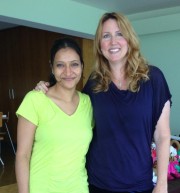
with Nasim Afsar, MD, MBA
Dr. Wendy Myers
Welcome to the Myers Detox Podcast. I’m Dr. Wendy Myers, and on this show, we talk about everything related to heavy metal and chemical toxicity, and in particular, the health issues caused by toxins. We discuss all kinds of other topics like bioenergetics, emotional trauma, and more advanced topics in health and biohacking. Today on the show, we have Dr. Nasim Afsar, and she’s going to be talking about using AI for your health, using wearables, and how to collate all this information in a comprehensive way, and where health is going in the future using AI. So it is really an interesting conversation that we’re going to have today.
Dr. Nasim, thank you so much for coming on the show.
Dr. Nasim Afsar
It’s so lovely to be here with you. Thank you for having me.
Dr. Wendy Myers
You wrote a book called Intelligent Health. What does that mean in practical terms for someone who’s struggling with- and this is what so many people are dealing with: fatigue, brain fog, inflammation, and chronic symptoms- who feels pretty much lost in today’s healthcare system?
Dr. Nasim Afsar
I think you’d agree that our health and care systems today are not intelligent. We have a lot of information, but not enough insight into what’s going on with us. That’s for a whole host of reasons, including the fact that we have data in many fragmented places. We have our traditional healthcare data in one place. That’s only 20% of what determines our health. The 80%, as you have advocated and pushed for, is all this other stuff, which includes all the environmental factors that ultimately impact our health. It’s everything from the air we breathe, the food we eat, our habits, and our genetics. Generally, what we get exposed to on a day-to-day basis.
When we don’t feel quite right, whether it’s fatigue or brain fog, the way that usually gets looked at is the 20% of what determines our health, what happens in traditional healthcare, at the exclusion of that 80%. You wouldn’t make any other intelligent decision in life by looking at just the 20%. You’ve got to bring and unify all of that data together. That’s the first pillar of intelligent health. How do we look at the person holistically by bringing all the pieces of their data, including the environmental factors, together to understand the person holistically?
The second pillar is that we have to apply intelligence, not just to bits and pieces of this, but we need to apply AI to the totality of that data. Then the last pillar of intelligent health is that it has to be consumer-driven and owned, because you’re the one who knows that you don’t feel quite right. Your numbers could look really great, but you know that something is not right. Unless this data, which gives insight and power, is owned by you, you’re not going to figure out what’s going on. So to me, this is the way we bring intelligence into what constitutes our health, sitting here in 2026.
Dr. Wendy Myers
I know a lot of people are using AI to analyze their health symptoms. I have conversations with friends all the time who have very complex health issues and are trying to figure out why they have POTS or Ehlers-Danlos syndrome, and people are uploading their diagnostics and their blood tests to AI to try to figure out what’s going on. Can you expand on how people should be approaching AI when it comes to their health questions?
Dr. Nasim Afsar
I see what’s happening today in how the consumer is interacting with generative AI models as a symptom of traditional healthcare not being able to address the symptoms people are having or the things they are feeling. When we’re not able to address that, people are left to their own accord to try a host of things, including generative AI models, to shine light onto what’s going on with them.
I think when we look at generative AI models to help us better understand things, there are a couple of key things to keep in mind. First, we want to make sure that we’re sharing this data in environments that have the security and safety that is meant for health data, so that this can’t be leveraged and used for other purposes. A number of the large language model companies have now created that safer environment for us to upload our information. Trust is really key for me, so you want to make sure that you trust the organization to whom you’re uploading the data for analysis.
Having said that, these large language models have access to a wealth of information that can help you better understand what your information says and potentially brainstorm about what else could be going on. I always encourage people to leverage it to better understand what’s going on and to figure out what are the questions you should be asking a healthcare professional to better dive into things. The reason I add ‘ask a healthcare professional’ is that I am confident these models will evolve at some point where you could have a two-way dialogue without needing another layer to check with someone.
Right now, though, it’s not that the models are stupid, but they are trained on data that is incomplete. When it comes to particular populations or diagnoses that have been overlooked or not studied, like almost all of women’s health, you could be asking questions and getting answers that are erroneous. Not because the model is bad or malicious, but because it doesn’t have data on women’s health in the way that it should to appropriately answer things.
Nevertheless, people have found all sorts of things they wouldn’t have otherwise understood about their health. So just like everything else, it’s a tool. Use it, but for now I recommend having a healthcare professional in the loop to make sure you’re not going to start or stop something that could be harmful just because the data isn’t robust.
Dr. Wendy Myers
Or self-diagnose. A lot of things that people love to do.
Dr. Nasim Afsar
Exactly. It can be the context of a diagnosis is much greater than just a handful of information. Again, the models are just not at the maturity level where they can do that. I’m sure at some point they will be. It’s just not there right now, and your health is just far too important to have it impacted by lack of information or misinformation.
Dr. Wendy Myers
When you say don’t look at the typical AI apps and instead look at large language models, what do you mean by that? Are there any specific apps you recommend that can give more accurate health data?
Dr. Nasim Afsar
Yes, I’d say large language models like Anthropic’s Claude or Google’s Gemini. I know people have been uploading information and getting insights around what’s going on with them. I think those are two organizations that have historically had higher ethical standards for what happens to consumer data and have spoken very publicly about the protections of the individual. So I think those, from a large language model standpoint, are ones I routinely look up stuff on. In terms of apps, there are a whole host of apps that are helpful depending on what you’re looking to better understand.
I will say this, I’m a big technology person and a numbers person. I love wearables. Yet, right now I’m not wearing anything, because I love using wearables in short spurts to better understand either transitions in life or something like my sleep and my activity. I’ve found that when I’m over-relying on that, I’m creating a disconnect between what the data says and how I feel as a person. I think it’s critical, especially in this day of lots of information all the time that we stay grounded and don’t forget that our body tells us if something is right or wrong. It’s not just the data.
I was having this interesting conversation with a highly educated person, and he was sharing that he loved his wearable that told him his sleep quality for the night before, because that’s how he knew when to go to bed the following day. I was like, “Well, you could also just see when you’re tired. If you’re not tired until 10:00, go to bed at 10:00.” So I feel like this is an over-reliance on data, because it’s not perfect, and you’re not just your sleep data. You may have had a flight the prior day, a busy work schedule, a sick child, and other constellation of things that constitutes how refreshed you feel the following morning.
If we lose that connectivity into who we are and how we feel, I think that’s really a disservice to our overall health. But there are a number of apps that are really great these days in terms of monitoring activity, sleep, and diet, and I’ve used a variety of them for spurts of time to gain insight into what’s going on with me, and then I embed things into my day-to-day and try to leverage that knowledge to live a healthier life.
Ads 11:27
And now a word from one of our sponsors. When did you realize that you were not taking the best quality protein powder? For me was when I realized I was taking a soy protein isolate powder. It had really nice packaging, but I realized the soy protein isolate is not very good for you and your kidneys, and it’s mostly GMO. There are a lot of people out there who just are not reading the labels and don’t know what they’re taking in their protein powder.
So for me, I’m a supplement snob. I want to take the best possible supplements for my body and for my health. A lot of people don’t realize that over two-thirds of protein powders tested by consumers reports they had above California’s Prop 65 limits and lead sometimes ten times over the limit. In another study, 47% of top U.S. protein powders exceeded the limits and 21% had more than double the limits of lead. It’s alarming what’s in some protein powders. That’s why I switched to Puori grass-fed whey. It’s pronounced puree, which stands for pure origin.
Every single batch is third-party tested for 200-plus contaminants. You can look at every bag here and see there’s a QR code on every single bag right here. You can see every single batch is tested and what your batch tested for. No other brand is doing this. Every serving delivers 21g of whey protein from grass-fed cows with six grams of BCAAs (branched-chain amino acids) and 2.4g of leucine. It is free from hormones, GMOs and pesticides. It is made with all clean ingredients. They have a bourbon vanilla flavor with real vanilla seeds from bourbon vanilla from Madagascar, which is the best vanilla in the world.
The dark chocolate is made from organic cocoa powder. And that’s really important because cacao is very, very contaminated with heavy metals. They, of course, test every single batch. Honestly, it feels really good knowing that I’m taking the highest quality protein powder. It’s made from whey. A lot of plant proteins can have heavy metals in them. They have problems. Soy is genetically modified unless it’s organic. So this is clean protein tested for safety with total transparency. You can get Puori’s fantastic whey protein powder and use code WENDY20 at puori.com/wendy20 to get 32% off your first Puori grass-fed whey protein powder order when you start a subscription. Again go to puori.com/wendy20 and use the code WENDY20 and get this limited-time offer.
Dr. Wendy Myers
I totally understand how your friend feels. I have my Oura Ring too, and I’m obsessed with it. I love looking at my sleep data. But it’s true. I’ll have days where I wake up feeling really tired and I’m like, “Oh no, I didn’t get enough sleep,” and then I look at my ring and I’m like, “Oh, I’m totally fine, I got 12 minutes of deep sleep.” And then the opposite can be true. I’ll wake up feeling pretty good and I only got five and a half hours of sleep. So you do have to kind of look at more how you feel. But there are a lot of people in the wellness space taking supplements, doing detoxes, using wearables, doing endless testing, and biohacking out there, but often without clarity or direction. How do we separate meaningful health action from the noise and the health optimization overload?
Dr. Nasim Afsar
I think that’s a great question. It reminds me of a couple months ago when I was asked to facilitate a longevity discussion amidst a group of highly accomplished people across lots of different fields. We kind of went around the table and shared what our best practices were, and I just noticed that the tension in the room and the anxiety just continued to increase, to a point where my EQ was like, “wow, this is really not healthy”. I paused everyone and said, “You know, while there are lots of different things that one can do, some that have evidence, others don’t have evidence but are good for you. Some don’t have evidence and are bad for you. The one thing we do know is that having high anxiety is definitely not good for you. Having a high cortisol state where you are revved up and constantly thinking, ‘Am I doing this? Did I do enough of that? What am I missing? That sense of constantly being in stress in pursuit of longevity or health span is definitely not healthy.”
Dr. Wendy Myers
That’s not going to get you the long-term results, the longevity.
Dr. Nasim Afsar
Exactly. We have to bring the temperature down, especially with all the different options out there. I always use a couple of key principles when I’m trying to figure out if something makes sense. The highest level of things one should do are things that have evidence behind them, that’s a no-brainer. We have known for a very long time about the benefits of sleep, nutrition, and activity, and I find that a lot of people don’t do the basics and are instead doing a lot of other stuff that isn’t as foundationally strong.
Do the basics. Do preventive care. The standard cancer screening stuff, there’s a reason it’s there. It is associated with reducing your mortality and your harm. Let’s say we’ve done all the basics, which to me is a no-brainer. Then the next level is there are a host of things to do that don’t have evidence, and that doesn’t mean that they’re bad. It just means that they haven’t been studied. For those, I always try to make sure I’m doing ones that make logical sense and are trusted, versus there’s a whole host of stuff where I’m like, “I’m just not sure that makes sense to me.”
Someone was sharing with me that every morning when they wake up, they make themselves this shake which had a whole series of things in it that just did not sound appetizing. She was like, “I know it’s awful, but I wake up, I make it, I drink this thing, and then I know I’m set for the day.” I was like, more power to you if you can do that every morning. But from a mental health standpoint, for me, I wake up in the morning and I am so energized, so looking forward to the day. My tea in the morning is a ritual for me. I cannot imagine substituting that with something that will just make me miserable, even if it’s for the 10 minutes I’m drinking it. I just don’t believe that there’s been evidence in this stuff that says that’s the thing that’s going to do it. So I ask: does this logically make sense? I’m also very careful about what I put in my body. When we decide to put something in our body, we need to make sure it is from a source that is trusted.
I know peptides are big, and for some people they’re a critical part of their wellness. I was speaking with a concierge doc who was sharing with me that an individual had come to him with a peptide that all of his friends were taking and feeling good and energized, and he wanted to have it injected. The doctor was concerned, “If I’m going to inject this, there’s going to be liability in this. Can I send this to a lab that I know to get it analyzed?” He gets a call from the lab: “Well, it does have amino acids, and it has LSD and arsenic.” So people feel good because it has LSD, and the arsenic. Why would you inject that? That’s not the case with every vial of peptides, that’s not my point. My point is, if you’re going to inject something in your body, it is critical to make sure that you know what it is and that it’s not going to cause harm. For that, unfortunately, it’s putting it on the shoulders of the consumer to have to figure that out, which is really a lot.
Dr. Wendy Myers
I didn’t know there are millions of people searching for peptides. It’s like one of the top health search terms. People are taking peptides and have no idea where a lot of this stuff is coming from or what they’re injecting, even though some of these sites are well-meaning. You just don’t know, it’s definitely the Wild West.
Dr. Nasim Afsar
People cut it with different things. I don’t think anyone intentionally sat and said, “I’m going to add arsenic to this vial,” but somewhere in the process of purifying or sorting stuff out, arsenic ended up there. The LSD, I think they did that one on purpose to make people feel good. But if you’re the kind of person who doesn’t routinely inject LSD into their veins, I would say: why would you take a peptide that has components in it? Making sure they are coming from a trusted source is really critical.
Ads 22:07
Now a word for one of our sponsors. So I’m a huge, huge fan of Tru Energy Skincare. This is a bioenergetic skincare line that I’ve been using for almost two years now, and it’s what I use exclusively. It’s so good. They have a new product out called the Bio Adaptive Hydration Oil. This is really, really key for protecting your skin from dry winter weather because when you have cold weather plus wind, plus indoor heating, that’s gonna equal to dry, irritated skin. So hydration is really, really key to protect your skin barrier and, you know, preserve your skin.
Why does this matter? It’s because dehydrated skin can look dull, tight, and have more fine lines and wrinkles. Supporting your skin during winter helps it stay resilient and healthy. As I mentioned, I love Tru Energy Skincare, and they have this bio-adaptive formulation designed to boost hydration and nourish the skin. It’s a bioactive, nourishing skin oil, and so it’s infused with frequencies. There are dozens and dozens of frequencies imprinted on their energy-optimized blue bead that’s in all of their products. It’s imprinted, actually, with not hundreds, but thousands of frequencies to support cellular repair, improve collagen production, and increase regeneration of your skin.
This is what I’m using at 53 to get the best skin that I can possibly get. This is one of the secret weapons that I personally use. This bio-adaptive hydration oil uses nutrient-rich, skin-supportive and clean ingredients as well. All you do is add one to two drops to your face cream or Tru Energy products like their serums or their lotion, and it just increases that hydration. I also use it ’cause I do face yoga every night. I use the hydration oil. I put it all over my skin, and massage, and I’ll do guha and other things. It’s part of my nightly routine. So there are a lot of different uses for it, including increasing the hydration and the effectiveness of the products you already have. Try it for yourself. Go to trytruenergy.com/wendy5
Dr. Wendy Myers
You argue in your book that the future of healthcare is shifting from episodic care, just kind of piecemeal, to continuous health intelligence. I think this is important, especially for the elderly, like my mother and her husband who are constantly going to so many different appointments, and no one’s talking to each other or communicating or sharing information. What would that look like for the average person at home, with wearables, environmental toxin monitoring, AI coaching, personalized prevention, just getting all that in one cohesive place?
Dr. Nasim Afsar
Wendy, my vision is that in the future state, the way health and care happen is that continuous monitoring and that data, which you permission because you own it, gets permissioned to your provider. What your provider is doing is not taking care of you once a year when you go in for a visit. It’s not happening at that episodic event, but continuously getting to see your data and have predictive analytics to come up with a personalized plan for you. Meaning, if you have asthma, it’s looking at your environmental pollen counts and the winds. It anticipates based on history and big data that you are likely to have an asthma exacerbation. Before that happens, they are calling the pharmacy, refilling medications you need. Ideally that medication gets delivered to your doorstep. If you need an air filter, the approval for that is sent to the insurance company. So all you do is you’re breathing fine and don’t know that all these changes are happening, but they are getting monitored. All you know is, hey, for the next three days, the pollen counts are really high, put this air filter in your bedroom while you sleep, use these medications, and we’re going to virtually check in with you daily to make sure you’re on track.
I think there are a whole host of things as we think about the aging population and people wanting to age well at home. We can monitor people’s gaits, and if it looks like you were sitting down on a chair and getting up just fine yesterday, but today you’re kind of leaning to one side, or when you’re getting up you’re using a lot more assistance, instead of waiting until that continues to devolve and you have a fall and a hip fracture, it picks that up and says, “Hey, it looks like your gait is off. Can we send a physical therapist to your home, select a day and time that works for you, to do an evaluation, give you some exercises to strengthen where you have weakness, or ensure you’ve got the right shoes in place, or make sure you don’t have fall hazards in your home?” So it really shifts to: let’s be proactive, personalized, and catch the person before something goes wrong, whether they’re a 20-year-old with asthma or an 80-year-old living independently.
Dr. Wendy Myers
I love the sound of that, and they’re doing that now in Korea. I was just there last November, and you can go into an office and they’ll do an AI scan of your body, and based on that scan know how to adjust you and do different treatments, including acupuncture, ear seeding, and some of the Eastern traditional Chinese medicine care combined with Western techniques. It’s super interesting. But I haven’t heard of that being available yet here.
Dr. Nasim Afsar
This kind of goes back to what we were talking about earlier about deciding what you go with and what you don’t in an environment that is very noisy. There are things that are beneficial that may not have evidence, and that doesn’t mean they’re not good for you. It just means that we haven’t collected evidence. I’m a huge believer in acupuncture and have personally benefited from it tremendously. The fact that that’s a whole separate thing you have to do and is not integrated in routine care. I tried to be like, “Nope, none of this works for my pain,” and then tried acupuncture and was like, again, we may not understand the details of this, but this works. It’s transformative.
I think more as we move forward, there’s more data on acupuncture and how it works with the balance of our over activated autonomic nervous system. The more we integrate and figure out how to take care of that whole person versus the symptom. I think one of the things I love about acupuncture is that it’s never about the symptom. It’s about what’s the root cause of that symptom. I wish we would learn that and adopt that more in Western medicine. It’s not about the high cholesterol. What’s the root cause of that high cholesterol? It’s not about obesity. What’s the root cause of obesity? We need to fundamentally address health and disease by understanding what’s causing it rather than waiting until something goes wrong. We do have great solutions when things go wrong, it’s just that it doesn’t have to be that way.
Dr. Wendy Myers
That brings me to another question. I feel like AI right now when you ask it questions, you’re getting very honest answers in regards to vaccinations, or getting steered towards natural health recommendations. My concern is that as pharma gets the idea that this is not really in their best interest, people may be steered more towards traditional, conventional medical interventions, and the natural health recommendations will be pushed aside. What are your thoughts on that?
Dr. Nasim Afsar
When I think about what pharma is working on and developing, and I’ve worked with a number of different companies over the years, the majority of what they’re pushing for are illnesses where we are going to need to have a fundamentally different understanding of disease and how we treat it. If you think about some of the challenges we have with cancer diagnoses or autoimmune diseases, the majority of what gets developed and pushed out by pharma, GLP-1s being the big exception more recently, is fundamentally hitting at the root of disease. Now, could we bring down the cancer rates and the autoimmune rates if we have a different living environment and less bombardment of a variety of toxins throughout our life? Absolutely. But that’s going to take a really long time and coordinated effort. So I don’t really see this at odds with what pharma is doing.
There was a recent announcement at a major oncology conference about a medication that in clinical trials doubled the life expectancy of people with pancreatic cancer, which is a horrible cancer that has low survival rates. When you look at drug development, there is so much that needs to be understood and done in that space. But to me, it’s not this or that. We have to a fix our environment and exposures. We have to deeply understand science, and there’s room for both of those to coexist and help support us in moving forward.
Ads 33:31
Now a word from one of our sponsors. Like many of you guys, I’m trying to eat super, super healthy, and that’s why I love really good quality olive oil. And by good I mean fresh. Olive oil packs some of the most flavorful and healthiest nutrients like antioxidants when it’s fresh from the farm. That’s the problem with store-bought olive oil. They’re not fresh. They can sit on the shelves for months, growing stale and losing that antioxidant punch. That’s why I get my olive oils directly from small award-winning farms, thanks to a fellow named TJ Robinson, who’s also known as the olive oil hunter.
So when I tasted TJ’s farm fresh olive oil, I fell in love with the vibrant grassy flavors. They’re incredible on salad, veggies, pasta, meat, fish, you name it. I use it on everything. Everything I cook, I’m using this olive oil. As an introduction to his fresh-pressed olive oil club, TJ is willing to send you a $39 full-size bottle of olive oil for only $. It’s one of the world’s finest artisanal olive oils. It’s fresh from the new harvest, and it’s just $1 to help ’em cover the shipping. There’s no commitment to buy anything now, or ever. Get your free $39 bottle for just $1 shipping and taste the difference that freshness makes. Just go to getfreshwendy.com to take advantage of this offer and get a full-sized $39 bottle for just $1
Dr. Wendy Myers
I totally agree. I guess my concern is just that people need to have awareness around this. It’s the same thing as when you go on Google and do a search. You’re directed to sites that only have mainstream medical information. My concern is that with ChatGPT or some of the free AI apps out there, based on how they’re trained, they’re most likely going to be trained on conventional mainstream medical solutions, and that may be an issue people need to be aware of when they’re searching for health answers and underlying root causes.
Dr. Nasim Afsar
That’s a great point. At the end of the day, there are rules for the algorithms that give us information, and that can determine what you get exposed to and therefore what you do. I know that for search sites like Google, because of the high volume of health questions they got from the very beginning, they wanted to make sure people weren’t directed to websites that could cause bodily harm. So they relied on well-established organizations like Mayo Clinic or Cleveland Clinic. If you Google stuff, those are things that pop up as trusted sources. But what that does on the flip side is there is a whole host of other options that the consumer doesn’t get exposed to.
I think there are kind of two different solutions for that. One is that reputable healthcare establishments need to more robustly integrate other interventions that can help support people. This should not just be something the consumer has to go figure out. The other piece is to figure out how, in this environment where there is a lot of noise and there are things that can be harmful, but there’s also a lot of good, how do you distinguish that? Who are those trusted voices that you can elevate because you know that people want to ultimately be healthy, not just figure out how to deal with illness? That’s a cultural evolution! Then we have to figure out how to make that operational so that we’re getting that information to the consumer You bring up a great point, which is, ultimately if you don’t present the information or if it’s buried on the fifth page, the consumer’s not going to see it and is potentially not going to get the benefit of it. So how do we balance that?
Dr. Wendy Myers
Thank you. That’s a clear answer. If someone’s listening and wanted to take three concrete steps today to take charge of their own health, what would your recommendations be?
Dr. Nasim Afsar
This is a little bit futuristic, but not super futuristic in that these capabilities are being developed as we speak. I think the consumer should be aware of it and take advantage of it. This is at the heart of my book, Intelligent Health. The first one is: don’t look at bits and pieces of your data. You’ve got to pull it together, because those different components, from your sleep, activity, diet, and blood tests, all of them are interconnected and interrelated. How you ultimately feel, if you feel clear-headed and energized or not, those are connected. So the first thing I would say is just make sure that you are integrating all of this data together.
I don’t mean you sit down and integrate it yourself. There are a whole host of technology solutions, including some of what we talked about with large language models, that can help do that so you can have clearer insight into why you’re feeling the way you are. I feel for today’s consumer because you get a full-body MRI in one place, a set of 140 labs in another place, your primary care doctor’s doing things at another place, and then there’s your specialist at another place. We’ve got to bring that together to look at ourselves holistically.
The second thing I would say is you do have to be discerning around the information that you’re getting. Meaning, just because something sounds good, it doesn’t mean it’s the right thing for you. So how are you going to make sure that the option you’re going with isn’t a vial that has LSD and arsenic, but is actually something that has beneficial components that are going ultimately help you? That is a combination of doing web searches, talking to professionals who have experience in this space, and continuing to stay educated and up on what’s going on. I think some of that is going to be streamlined as we get more data around this and have better decision-making tools for the consumer, so you don’t have to own all of this yourself. Because ultimately, we should be able to go on with our lives, personal and professional lives, without having to dedicate so much time trying to put all these pieces together.
Dr. Wendy Myers
Exactly. Can you mention the apps again that you recommend for people to collate all this data and try to get some better insight?
Dr. Nasim Afsar
I think Google’s Gemini and Anthropic’s Claude are good ones to look up health data and better understand it. When it comes to wearables, there are so many great ones for a variety of things, including Whoop, Oura and Apple Watch. Looking at what you’re trying to get at and using them accordingly. I would say there are people who thrive monitoring their data every day and there’s nothing wrong with that if it works for your understanding, planning, and enabling you to have better health. For me, I’m an intermittent user: I’ll use a wearable for a number of weeks, look at the data, change or do lifestyle modification, and then go off it and try to be more grounded and mindful. But there is no wrong way of doing that, as long as you listen to yourself and make sure that what you’re doing is bringing you better health, both physical and mental.
Dr. Wendy Myers
I agree. You have to listen to your physical body and your intuition as well.
Dr. Nasim Afsar
Absolutely.
Dr. Wendy Myers
Where can people get your book, Intelligent Health?
Dr. Nasim Afsar
You can pick up Intelligent Health anywhere you get your books. It’s available on Amazon and Barnes & Noble. I’m a big independent bookstore person, and they have to order it in, but they have access to it through my publisher, Wiley. So you can pick it up anywhere you get your books.
Dr. Wendy Myers
Fantastic. Dr. Nasim, thank you so much for coming on the show. That was a really fascinating conversation. I know a lot of people are wondering how to use AI for their health, what kind of info to expect, and want to know what’s going on in the future of health with regards to AI. So thanks so much for answering so many of our questions.
Dr. Nasim Afsar
My pleasure. It was so wonderful to have this conversation with you.
Dr. Wendy Myers
Everyone, I’m Dr. Wendy Myers. Thanks so much for tuning in to the Myers Detox Podcast, where I bring you experts from around the world to help you make those discernments and distinctions about your health so you can enjoy the good health that you deserve.
Disclaimer
The Myers Detox Podcast is created and hosted by Wendy Myers. This podcast is for information purposes only. Statements and views expressed on this podcast are not medical advice. This podcast, including Wendy Myers and the producers, disclaims responsibility for any possible adverse effects from the use of information contained herein. The opinions of guests are their own, and this podcast does not endorse or accept responsibility for statements made by guests. This podcast does not make any representations or warranties about guest qualifications or credibility. Individuals on this podcast may have a direct or indirect financial interest in products or services referred to herein. If you think you have a medical problem, consult a licensed physician.